Find the shot without naming the file
You remember the shot. Water coming over rocks, late in the day, somewhere in
the second card. What you do not remember is whether it was
C0130 or FF17, or which folder you put it in.
So you scrub. And the reason scrubbing is slow is not the scrubbing — it is that the file name never described the picture, and nobody has time to tag footage while a shoot is running.
Type what you saw
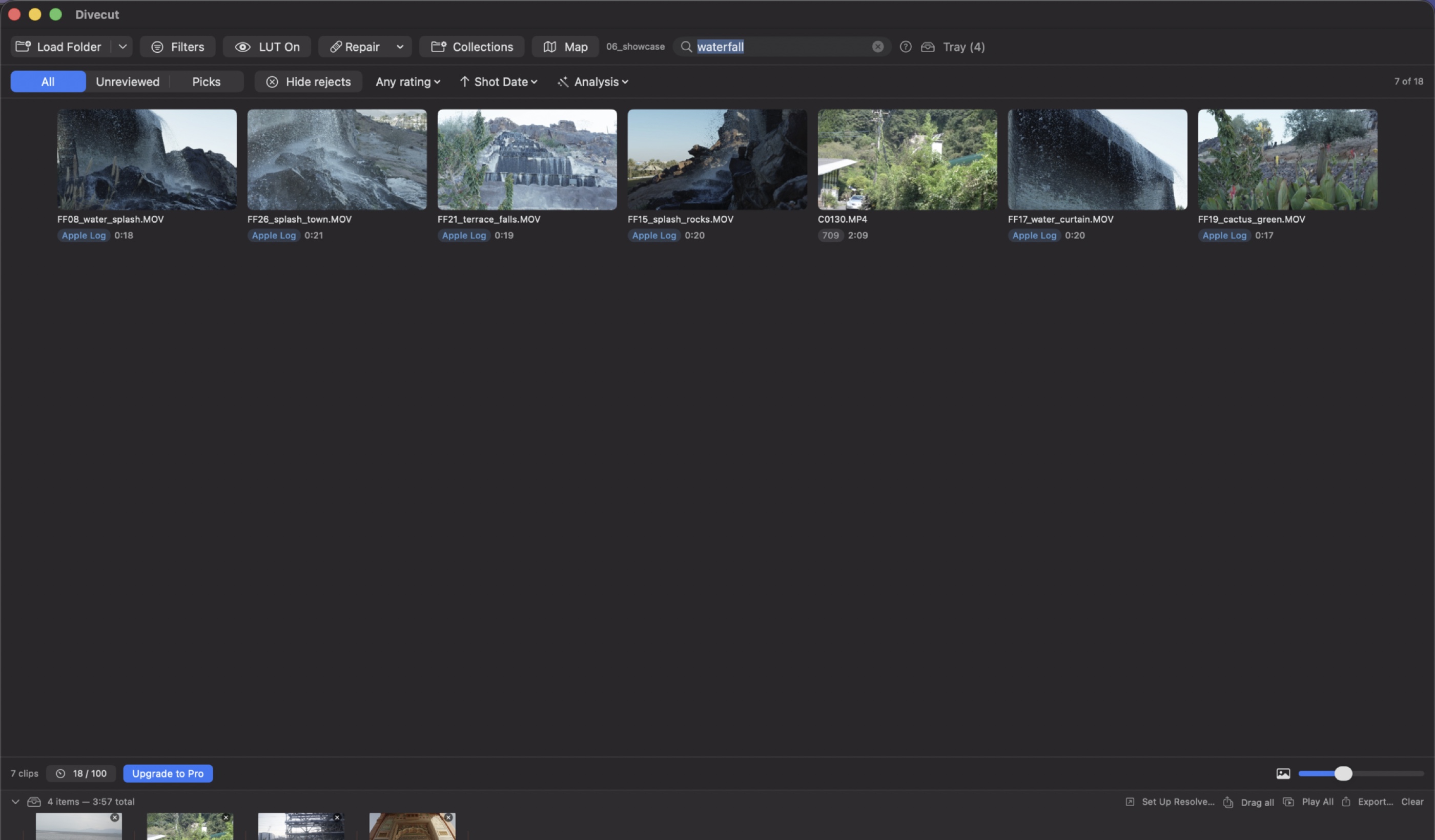
Divecut matches your words against the frames themselves. Not the file name, not tags you never wrote, not the folder. The results are ranked, so the closest shot is first rather than buried in a list of maybes.
Open one and it jumps to the second where the match actually is, which matters when the thing you searched for happens once, thirty seconds into a four minute clip.
How it works, briefly
When you add a folder, Divecut samples each clip every two seconds, converts those frames the same way it converts what you see on the grid, and runs them through Google's SigLIP 2 model to produce an embedding. Your query is turned into the same kind of embedding and compared against them.
Two consequences worth knowing:
- It is looking at pictures, not sound. The model does not listen to the audio, so "someone says action" is not a query it can answer.
- It happens once, per clip. Indexing runs after import. Searching afterwards is comparing numbers, which is fast.
Search in English. The model accepts other languages, but the prompt handling is built around English and I have not measured the others well enough to promise they work as well — so the field says so rather than letting you find out the hard way.
Nothing leaves your Mac
The model runs on your machine, through Core ML. Your footage is not uploaded, not sampled to a server, and not processed by anyone else's API. That is not a privacy stance bolted on afterwards — it is the reason the feature works on a card of client material you are contractually not allowed to upload anywhere.
It also means it works with no connection at all. On location, on a plane, on a laptop that has never met your studio network.
What it is not
It will not read a slate, recognise a specific person by name, or find "the take where the focus pull worked". It finds things you can describe by what they look like. Within that, it is the difference between remembering a shot and finding it.
Divecut is a footage browser for macOS and iPad. It shows Log clips in the colour you shot them for, lets you search them in plain words, and hands your selects to DaVinci Resolve with the Log intact. See everything it does.